

How to Avoid the Biggest Optometry Eligibility Verification Pitfalls with Frequency Limits
- yourrevbilling
- Mar 27
- 5 min read
In the world of optometry, there is nothing more frustrating than providing excellent clinical care, submitting a clean-looking claim, and receiving a denial weeks later with the dreaded message: "Frequency limit exceeded."
Eligibility verification is the foundation of a healthy Healthcare Revenue Cycle Management strategy. Yet, many practices treat it as a checkbox rather than a deep dive. When you miss a frequency limit: whether it’s for a comprehensive eye exam, a frame allowance, or a specialized diagnostic test like an OCT: you aren't just losing the reimbursement for that service; you are losing the staff time spent processing it and the cost of the materials already ordered.
At Revolutionary Revenue Management, we see these "silent denials" daily. They are often preventable with the right systems and a specialized understanding of how different payers track time.
The "Frequency Limit" Trap: Why Standard Verification Isn't Enough
Most front-desk teams perform basic eligibility verification. They check if the policy is active and if the patient has a co-pay. However, standard verification often fails to uncover the nuance of frequency limits.
A frequency limit is the specific timeframe a payer mandates between services. If a patient’s plan allows one comprehensive exam every 12 months, and they last saw an eye doctor 11 months and 28 days ago, your claim will be denied.
Common Frequency Calculation Methods
Calendar Year: Benefits reset every January 1st, regardless of when the last service was performed.
Rolling Year (Service Year): Benefits reset exactly 365 days after the last date of service.
Two-Year Cycles: Common in Medicaid and some budget commercial plans, allowing one exam or one pair of glasses every 24 months.
If your staff doesn't know which calculation method a payer uses, they are essentially guessing. This is why specialized optometry billing services are critical; we know the quirks of VSP, EyeMed, and local Medicaid administrators that general billing companies often overlook.
Pitfall #1: Relying on the "Patient Memory" Method
The most common mistake an optometry practice can make is asking the patient, "When was your last eye exam?"
Patients are notoriously unreliable historians regarding their insurance usage. They may remember coming to your office a year ago, but they might forget the emergency visit they had at a different clinic or the "free" screening they received at a retail chain.
The Strategy: You must verify eligibility before the patient arrives. At Revolutionary Revenue Management, we recommend verifying benefits at least 48 to 72 hours in advance. This gives your team time to call the patient if a frequency issue arises, allowing you to either reschedule the appointment or inform them that the visit will be an out-of-pocket expense.
Pitfall #2: The Medicaid 24-Month Blind Spot
Medicaid plans are high-volume but often have the strictest frequency limits. In many states, Medicaid only covers a comprehensive exam (92004 or 92014) once every two years for adults.
If your practice treats a significant number of Medicaid patients, failing to check the "last date of service" is a recipe for a massive Accounts Receivable backlog. Because these patients are often on fixed incomes, collecting a balance after a denial is nearly impossible.
Quick Tip: Create a "Frequency Alert" in your EHR for all Medicaid patients. Before the appointment is even confirmed, the scheduler should be required to document the last covered exam date found in the Medicaid provider portal.
Pitfall #3: Mismanaging Medical vs. Vision Frequency
One of the biggest hurdles in Optometry Revenue Cycle Management is the overlap between vision and medical insurance.
A patient might be eligible for a vision exam today but not a medical exam, or vice versa. Furthermore, certain diagnostic codes can trigger frequency denials on the medical side that don't exist on the vision side.
For example, if you are monitoring a glaucoma patient, you may need to perform multiple focused exams (92012). While most medical payers allow multiple office visits, they have strict limits on the frequency of Visual Fields (92083) and OCTs (92133/92134).
Specialized Testing Frequency Limits
OCT (92133/92134): Often limited to twice a year for certain diagnoses, but some payers only allow one per year per eye.
Visual Fields (92083): Frequency depends heavily on the severity of the condition (e.g., mild vs. advanced glaucoma).
Fundus Photography (92250): Many payers consider this a "once per lifetime" or "once per year" per condition unless there is a documented change in pathology.
Failing to verify these specific medical limits leads to common mistakes in vision billing that drain your practice's profitability.
How to Optimize Your Eligibility Workflow
To avoid these pitfalls, your practice needs a proactive workflow that prioritizes accuracy over speed.
1. Automate Wherever Possible
Manual phone calls to payers are a time-sink. Using automated verification systems can reduce your eligibility-related denials from over 20% to under 3%. These tools pull data directly from payer portals, showing you exactly when the patient last used their benefits.
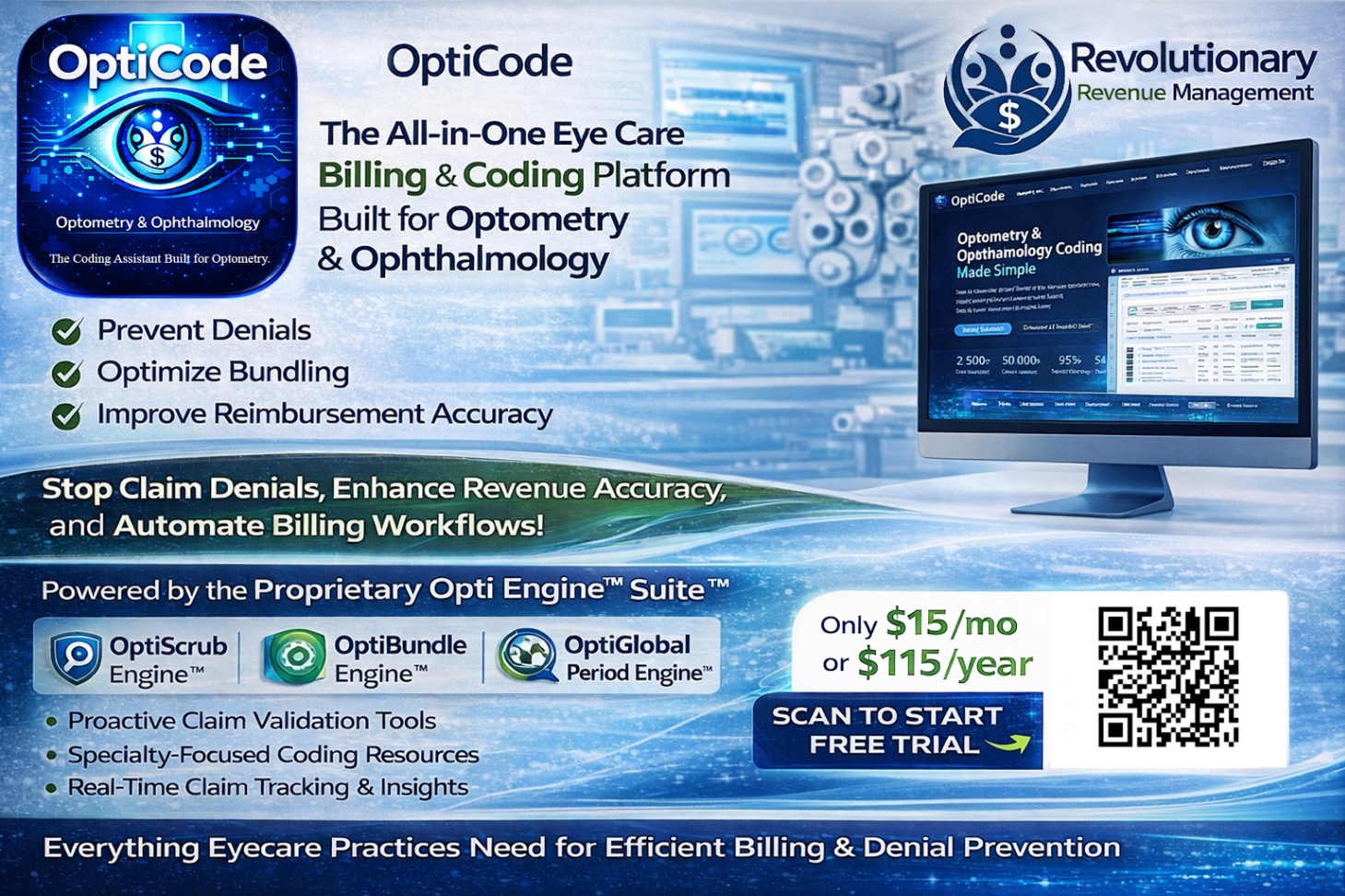
We highly recommend utilizing tools like the OptiCode App to assist with your coding and frequency logic. It’s designed specifically for the nuances of eye care.

The OptiCode app helps practices navigate complex coding and frequency rules in real-time.
2. Standardize Your Verification Forms
Ensure your staff is looking for the "Big Four" during every verification:
Last Exam Date: (Is it a rolling year or calendar year?)
Last Frame/Lens Date: (Do they have a remaining balance or allowance?)
Contact Lens Fitting Benefit: (Is it included or a separate co-pay?)
Medical Deductible Status: (If the visit turns medical, what is the patient's responsibility?)
3. Implement a "Patient Notification" Protocol
If a patient is out of frequency, don't wait for them to show up to tell them. Call them ahead of time. You can offer them a "private pay" rate or help them understand that their insurance won't kick in for another month. Most patients appreciate the heads-up; no one likes a surprise bill.
Why Specialized Billing Services Matter
You might be wondering why you can't just handle this in-house. The reality is that the problems with keying vision claims in-house often stem from a lack of specialized knowledge.
A general medical biller might understand how to check eligibility for a primary care doctor, but they won't understand the "Exam vs. Materials" frequency split that defines optometry.
At Revolutionary Revenue Management, our team specializes exclusively in eye care. We don't just "submit claims"; we audit the eligibility and frequency before the claim even leaves our system. If we see a potential frequency conflict, we flag it immediately, preventing the denial before it happens.

Using Technology to Bridge the Gap
In 2026, relying on paper charts or manual portals is a liability. Your practice needs a technology stack that supports your revenue goals.
Our OptiCode platform is an all-in-one billing and coding assistant that features proactive claim validation. By integrating technology with expert human oversight, we ensure that frequency limits are tracked and respected.
Whether you are looking to clean up your old AR or you want to revamp your entire revenue cycle, starting with eligibility is the most effective way to see immediate results.
Final Thoughts: Prevention is More Profitable Than Recovery
Frequency limit denials are among the most preventable errors in optometry billing. When you allow these denials to happen, you are essentially providing free healthcare and subsidizing your materials out of your own pocket.
By moving toward a model of advanced eligibility verification, you protect your chair time and ensure that every patient who walks through your door is a source of revenue, not a future administrative headache.
Stop chasing denials and start preventing them. If your current team is struggling to keep up with the shifting frequency rules of 2026, it may be time to look at how outsourcing ensures accuracy and compliance.
Ready to stop the leak in your revenue cycle?Contact us today to learn how we can streamline your eligibility and billing processes.


Comments