

Looking For Higher Testing Reimbursements? Here Are 5 Things Your Optometry Billing Services Should Know About 2026 Documentation
- yourrevbilling
- 2 days ago
- 5 min read
In the landscape of 2026 healthcare, the margin for error in optometry billing has narrowed significantly. Payers are utilizing more sophisticated AI-driven auditing tools than ever before, specifically targeting high-frequency diagnostic tests. If your practice relies on diagnostic testing: such as Optical Coherence Tomography (OCT), Visual Fields, or Fundus Photography: to bolster its revenue, your documentation must be impenetrable.
Many practices believe that performing the test and having a machine-generated printout is sufficient for reimbursement. In 2026, that assumption is a direct path to a recoupment audit. To maximize your optometry revenue cycle management, you must treat documentation as a legal defense of your clinical decision-making.
Here are five critical things your optometry billing services should know about documentation requirements to ensure maximum testing reimbursement this year.
1. The "Interpretation and Report" Must Be Distinct and Detailed
One of the most frequent reasons for claim denials or audit clawbacks in 2026 is the lack of a formal "Interpretation and Report" (I&R). For global billing of diagnostic tests like CPT 92083 (Visual Field) or CPT 92133/92134 (OCT), the professional component is not satisfied by a simple signature on a printout.
What your documentation must include:
The Clinical Finding: What did the test actually show? (e.g., "Superior arcuate defect noted in the right eye.")
The Comparative Analysis: How does this result compare to previous tests? Is the condition stable, progressing, or improving?
The Impact on Management: This is the most crucial part. How does this result change: or reinforce: the treatment plan? (e.g., "Results indicate a need to increase IOP-lowering medication" or "Stability noted; continue current management.")
Strategy: Ensure your EHR templates do not simply pull in raw data. There must be a dedicated narrative section for the doctor’s professional interpretation. An auditor should be able to read the I&R and understand exactly why the test was performed and what the next step in the patient’s care will be.

2. Explicit Medical Necessity and ICD-10-CM Alignment
In 2026, "fishing" for diagnoses via testing is a major red flag. Medical billing for optometrists requires that the medical necessity for a test be established before the test is performed. This means the chief complaint, history, or physical exam findings must justify the order for the diagnostic procedure.
Key Documentation Tips:
Order Date and Reason: The medical record must show a clear order from the provider, including the reason for the test.
Linking Codes: Your optometry billing services must link the correct ICD-10-CM code to the procedure. For instance, if you are performing a visual field test for a patient on Plaquenil, the primary code should reflect the long-term use of the medication (Z79.899) rather than a vague ocular sign.
2026 ICD-10 Updates: Stay current with the October 2025/2026 code updates. Using deleted or non-specific codes (those ending in .9) is an invitation for an automated denial.
Quick Tip: If you are unsure about whether a code pair is valid or if you are within a global period for a procedure, check our Ophthalmology Global Period Calculator to avoid timing-related denials.
3. The Distinction Between Diagnostic and Screening Services
The 2026 CPT manual has introduced and refined codes that distinguish between diagnostic intent and screening intent. A prime example is the updated reporting for dark adaptation testing.
CPT 92284: Used for diagnostic dark adaptation testing.
CPT 92288: A newer code established for screening dark-adaptation measurement.
If your documentation describes a patient with no symptoms and no relevant family history, yet you bill the diagnostic code (92284), you are at high risk for a denial. Your documentation must clearly reflect the clinical intent. If the patient has a known diagnosis or specific symptoms (like night blindness), the documentation must lead with those facts to justify the diagnostic reimbursement rate.
Proactive Step: Review your patient intake forms. If patients are self-referring for "wellness screenings," ensure your staff and your optometry billing services know how to differentiate these from medically necessary diagnostic exams. For more on optimizing these workflows, visit our practices page.

4. Navigating NCCI Edits and Imaging Bundling
National Correct Coding Initiative (NCCI) edits are the "rules of engagement" for how codes can be combined on a single date of service. In 2026, payers have become stricter regarding "mutually exclusive" procedures.
For example, billing a Fundus Photo (92250) and an OCT of the retina (92134) on the same day for the same eye is often restricted or requires specific modifiers (like -59 or -XS) if performed for distinct clinical reasons. However, simply slapping a modifier on a claim isn't enough. The documentation must clearly show that the two tests were not redundant.
Documentation Requirements for Bundled Tests:
Different Clinical Objectives: Document why both images were necessary. (e.g., "Fundus photography used to document the physical appearance and size of the lesion, while OCT was used to measure the depth and subretinal fluid.")
Site Specificity: Clearly indicate which eye (RT, LT, or OU) each test applies to.
Failure to manage these edits properly is a leading cause of revenue leakage. If you find your practice is constantly fighting these denials, it might be time to evaluate your optometry denial management strategy.
5. Physician Signatures and Authentication Timelines
It sounds basic, but "unsigned" or "late-signed" records are the low-hanging fruit for insurance adjusters looking to take money back. In 2026, the "reasonable timeframe" for signing a medical record is generally considered to be 24–48 hours.
Critical Rules for 2026:
Electronic Signatures: Ensure your EHR uses a secure, date-stamped electronic signature.
Authentication: The physician who ordered and interpreted the test must be the one who signs the report.
No Retroactive "Fixes": In an audit, adding an addendum weeks later to justify a test performed previously is rarely accepted unless there was a documented technical error.
If your provider is falling behind on chart closures, your optometry revenue cycle management will suffer. Unsigned charts mean unbilled tests, which leads to a massive backlog in your AR.
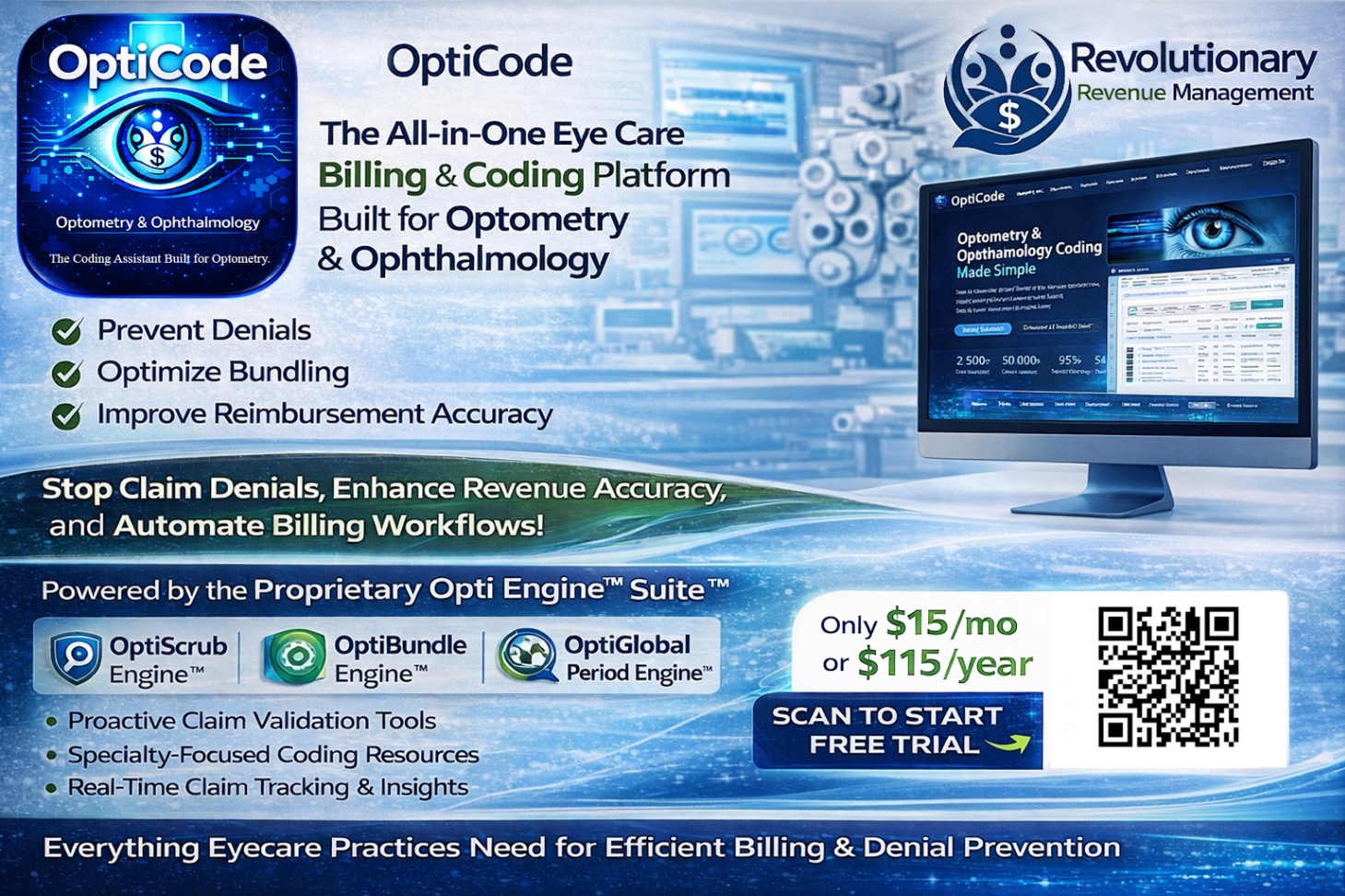
Strategy: Use tools like OptiCode to streamline the coding process so that providers can complete their documentation accurately and quickly, ensuring that the billing cycle begins immediately after the patient encounter.
Quick Reference: The 2026 Testing Checklist
To ensure your diagnostic tests are fully reimbursable, perform a monthly "mini-audit" on 5-10 charts using this checklist:
Is there a signed order for the test in the chart?
Does the diagnosis code on the claim match the medical necessity documented in the exam?
Is the I&R more than just a copy-paste of the machine's findings?
Are there modifiers applied correctly for bilateral or bundled procedures?
Is the report signed and dated within 48 hours of the service?
Final Thoughts
Maximizing testing reimbursements in 2026 isn't about finding "loopholes" or over-coding. It is about aligning your clinical excellence with administrative precision. When your documentation tells a clear story of medical necessity and professional expertise, your practice becomes "audit-proof" and your cash flow stabilizes.
Effective medical billing for optometrists requires a partner who understands these nuances. At Revolutionary Revenue Management, we specialize in ensuring that every OCT, Visual Field, and diagnostic test you perform is documented to the highest standard and reimbursed at the maximum allowable rate.
Don't leave your hard-earned revenue to chance or let lazy documentation habits drain your practice's potential. If you're ready to take your revenue cycle to the next level, contact us today or explore our blog for more insights on 2026 compliance and coding.
Comments